How epoxy flooring is installed: surface prep, coating and cure time
By Adam · Updated 2026-06-03
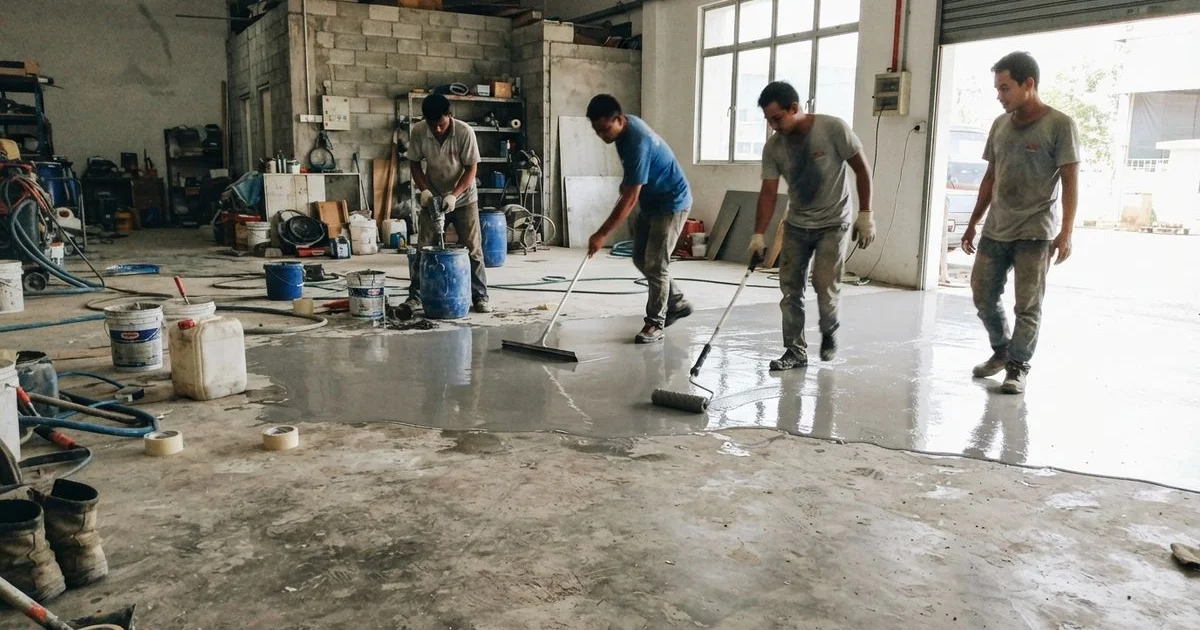
Epoxy flooring looks like a simple pour-and-spread job from the outside, but most of the work that determines whether it lasts happens before any coating is mixed. If you’re planning an install for an epoxy or industrial flooring project, knowing the sequence helps you spot a contractor who’s doing it properly versus one rushing to get in and out.
The installation sequence, step by step
| Stage | What happens | Typical duration |
|---|---|---|
| Inspection and moisture testing | Contractor checks the slab for cracks, contamination and moisture content | Half a day |
| Grinding and surface prep | Mechanical grinding removes old coating, laitance and oil staining | Half to one day |
| Crack repair and patching | Fills and levels any cracks, spalling or low spots | Half a day, runs alongside grinding |
| Primer coat | Bonding primer applied, sometimes with moisture-mitigation additive | Half a day, plus dry time |
| Base coat | The main epoxy coat goes down, often self-levelling | Half to one day |
| Topcoat and finish | Final coat, plus any anti-slip additive or flake broadcast | Half a day |
| Cure time | Floor hardens to full strength before heavy use resumes | 3 to 7+ days |
For a typical residential garage this whole process, excluding full cure, runs about two to three working days. A larger factory floor with more surface area to grind and more coats to apply can take a week or more before the crew is done, separate from cure time.
Why grinding takes as long as it does
Grinding is the step contractors most often get pressure to skip or shorten, and it’s the step that matters most. A concrete floor has a layer of laitance on the surface, along with whatever old coating, sealant, or contamination has built up over time. Epoxy bonds to concrete, not to that layer, so if it isn’t ground off properly the new coating sits on top of something that will eventually let go. This is the single most common reason epoxy floors peel or bubble within the first year or two.
A contractor grinding a 200 sqm floor properly needs real equipment time, dust extraction, and a full pass with the right grit. If a quote’s timeline looks unusually short for the floor area, ask specifically how much time is allocated to grinding versus coating.
What affects your timeline
- Floor condition going in. A previously coated or badly stained floor adds grinding and prep time compared with bare, new concrete.
- Moisture levels. A slab reading high on a moisture test may need extra drying time or a moisture-mitigation primer before coating can start.
- Coating system chosen. A basic single coat goes down faster than a multi-layer, anti-slip or flake-broadcast system.
- Weather and humidity. Malaysia’s humidity slows cure time compared with a drier climate, and a poorly ventilated space slows it further.
- Access and site logistics. A ground-floor bay with clear access moves faster than a basement level requiring extra ventilation for fumes.
What to expect on install day
A contractor should walk the space before starting, confirm the coating system and colour, and explain how long the area needs to stay closed off. Good practice includes protecting adjacent surfaces, ventilating the space during coating and cure, and giving you a clear return-to-use timeline rather than a vague “should be fine by tomorrow.” If none of that gets discussed before work starts, it’s worth asking before the crew shows up, not after.
Questions worth asking before you book
Before a crew arrives, ask how they’ll test for moisture, what happens if the slab reads high, and what the workmanship warranty covers versus the coating manufacturer’s warranty. Ask, too, how they handle a floor that shows bubbling or peeling in the first year, since that answer tells you more about the contractor than the sales pitch does. A team that has a clear, specific answer for each of these has usually done the job enough times to know where it goes wrong.
It’s also reasonable to ask for photos of a similar job partway through, not just the finished floor. Seeing the grinding and prep stage, not only the glossy topcoat, gives you a better read on whether corners get cut before the coating goes down.
Once the floor is down, our scoring method explains how contractor listings on this directory weigh workmanship and follow-through, which is worth checking before you book anyone.
FAQ
- How many days does epoxy flooring installation take?
- For a mid-size space, expect grinding and prep on day one, primer and base coat on day two, and topcoat plus initial cure on day three. Full cure to handle heavy traffic or chemical exposure usually needs several more days after that.
- Can I walk on epoxy flooring the next day?
- Light foot traffic is often possible within 24 hours of the final coat, but full cure for vehicles or heavy equipment typically takes closer to 5 to 7 days, sometimes longer in humid or poorly ventilated spaces.
- Does the concrete need to be completely dry before epoxy goes on?
- Yes. Epoxy is applied over a moisture-tested slab, and a contractor should check moisture levels before starting, since coating over a damp floor is one of the most common causes of bubbling and delamination.
- Why do some quotes include grinding and others don't?
- Grinding removes old coatings, laitance, and surface contamination so the epoxy can bond properly. A contractor skipping it on an already-rough floor is cutting a step that affects how long the finish lasts, not just saving you money.
Related on this site
- Browse epoxy & industrial flooring providers
- What epoxy flooring costs in Malaysia and what changes the price
- Epoxy flooring fumes and air quality: staying safe during installation
- What to expect when you install SPC or vinyl flooring
- DIY flooring installation vs hiring a professional in Klang Valley
- All guides →