Timber and parquet flooring in humid weather: moisture, warping and what to watch for
By Adam · Updated 2026-06-10
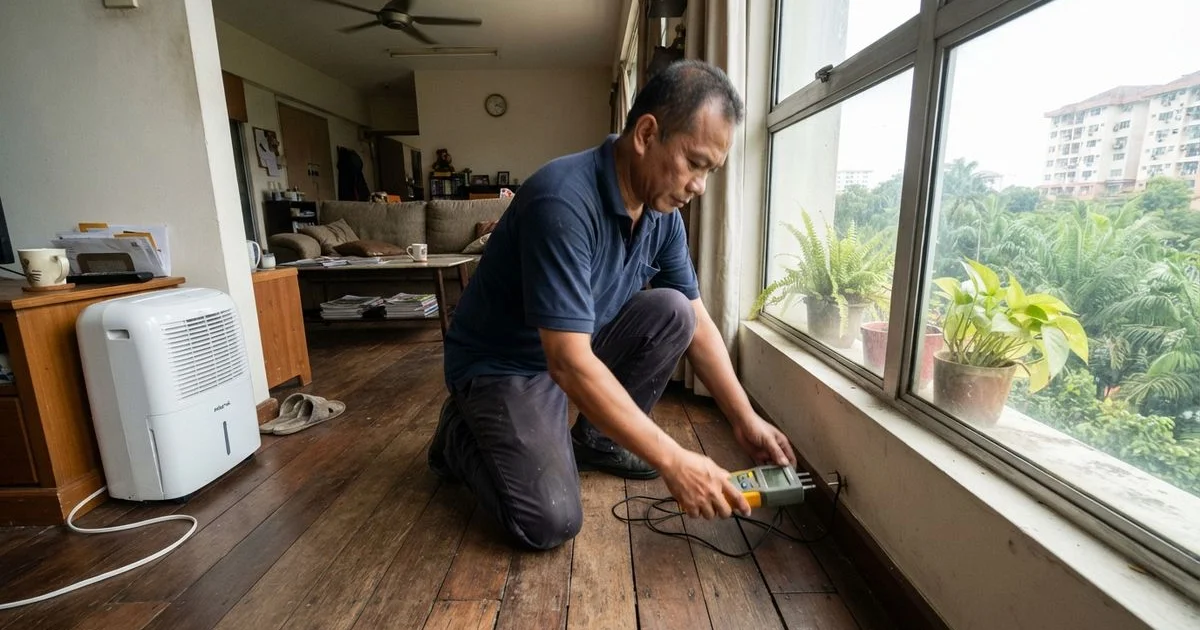
Klang Valley’s humidity is part of daily life, and it’s also one of the biggest factors in how well a timber or parquet floor holds up over the years. Wood moves with moisture, expanding when it absorbs humidity and contracting as it dries out, and in a climate that rarely gets truly dry, that movement never fully stops. Understanding it before you install, rather than after boards start cupping, saves both money and disappointment.
This is general information about a common maintenance concern, not a substitute for an on-site inspection by a flooring professional if you’re already seeing damage.
Why timber floors are sensitive here
Solid timber is a single piece of wood, so it expands and contracts with humidity more than engineered timber, which is built from layers running in different directions, giving it more dimensional stability. Neither is immune to moisture problems though: both need a proper moisture barrier between the subfloor and the flooring, especially on ground-floor concrete slabs where moisture can rise up from below over time.
If you’re comparing parquet and timber flooring contractors for a new install or a refinish, ask specifically what moisture barrier and acclimatisation process they use, since skipping either is a common shortcut that shows up as problems later.
Early warning signs
| Sign | What it usually means | What to do |
|---|---|---|
| Slightly raised board edges (cupping) | Moisture absorbed unevenly, often from below | Check subfloor moisture, don’t ignore it |
| Gaps that open and close with weather | Normal seasonal movement, usually not a problem | Monitor, note if gaps stop closing back up |
| Musty smell near skirting | Possible moisture trapped under or near the floor | Have a contractor inspect promptly |
| Dark staining or discolouration | Water exposure, often from a spill or leak | Identify and fix the source first |
| Boards lifting or separating at seams | More advanced moisture damage | Needs professional assessment |
Reducing the risk before it starts
- Acclimatise the timber. Planks should sit in the room for a period before installation so they adjust to the space’s humidity, reducing movement after laying.
- Use a proper moisture barrier. Especially important on concrete subfloors and ground-floor rooms.
- Manage humidity day to day. Running air conditioning or a dehumidifier in consistently damp rooms helps keep humidity swings smaller.
- Wipe up spills quickly. Standing water near kitchens, balcony doors, or air-con condensation lines is a common, avoidable cause of localised damage.
- Check balcony doors and window seals. Rain intrusion during storms is a frequent source of moisture damage near timber flooring close to external doors.
Moisture is not the only site condition worth planning around before work starts. Epoxy jobs carry their own health considerations during installation, covered in the guide on epoxy flooring fumes and air quality safety.
Rooms that need extra attention
Not every room in a home carries the same risk. Kitchens, areas near balcony doors, and rooms with air-con units draining condensation nearby see the most moisture exposure over time, so it’s worth paying closer attention to the floor in those spots even if the rest of the home looks fine. Bedrooms and living areas away from external doors and plumbing tend to be lower risk and often show fewer issues over the years.
If you’re renovating and choosing where to place timber versus a more moisture-tolerant material like tile or SPC, it’s reasonable to keep timber to the drier, lower-risk rooms and use a different material in kitchens or spaces with direct external door access, rather than assuming one material has to run through the whole home.
What to ask before you sign off on a job
Ask how long the contractor lets planks acclimatise before installing, what moisture barrier they use on concrete subfloors, and what their workmanship warranty covers if cupping shows up within the first year. A contractor confident in their process will have specific, consistent answers rather than a vague assurance that “it’ll be fine.”
When to call someone
A few small gaps that come and go with the season are normal and not worth worrying about. Persistent cupping, a musty smell that doesn’t clear, or boards that feel soft underfoot are worth a professional look sooner rather than later, since catching moisture damage early is often the difference between a sand-and-refinish fix and a full board replacement.
Our scoring method explains how contractor listings on this directory are assessed, which is a useful starting point if you need someone to inspect a floor that’s showing these signs.
FAQ
- Is parquet or timber flooring a bad choice in a humid climate?
- Not necessarily. Engineered timber handles humidity swings better than solid timber because of how it's constructed, and both can perform well with the right subfloor prep, moisture barrier and acclimatisation before installation.
- What causes timber floors to warp or cup in Klang Valley?
- The most common causes are moisture rising through an unsealed concrete subfloor, planks installed without letting them acclimatise to indoor humidity first, and ongoing exposure to spills or damp near kitchens and balcony doors.
- How do I know if my timber floor has a moisture problem before it visibly warps?
- Early signs include boards that feel slightly raised at the edges, small gaps that open and close with the weather, and a faint musty smell near skirting boards, all worth checking before the floor visibly cups or buckles.
- Can a warped timber floor be fixed, or does it need replacing?
- It depends on how much moisture damage has occurred and whether the source has been fixed. A contractor can assess whether sanding and refinishing will resolve minor cupping or whether affected boards need replacing.