Floor sanding and refinishing cost: what affects the price
By Adam · Updated 2026-06-12
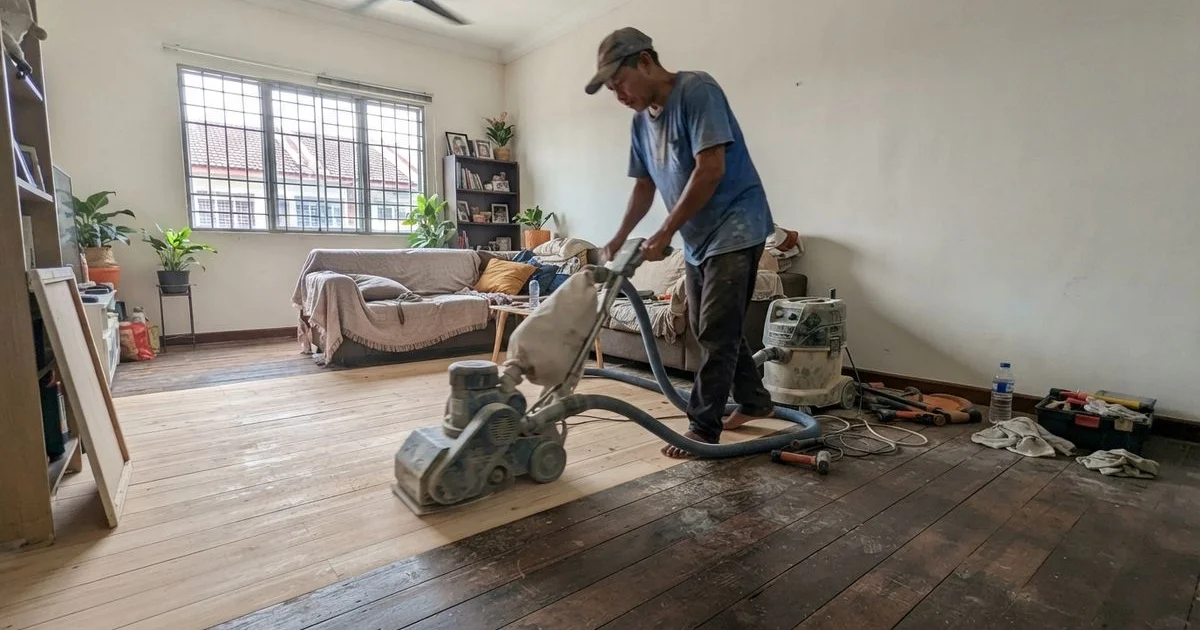
Sanding and refinishing an existing timber or parquet floor is usually far cheaper than replacing it, but the price still varies more than people expect, largely because floor condition matters as much as floor size. A worn floor with deep gouges takes real extra work to bring back, and that shows up in the quote.
If you’re getting quotes to restore an existing floor, it’s worth browsing floor sanding and refinishing contractors in the area first, since this is specialist work that not every general flooring contractor handles well.
Typical cost by condition and finish
These ranges cover sanding, gap filling and the finish coat, based on typical per-square-metre rates used across sanding quotes in this area.
| Floor condition | Oil-based lacquer | Water-based lacquer | Stain + lacquer |
|---|---|---|---|
| Good, light scratches only | RM11 - RM14 | RM14 - RM17 | RM16 - RM21 |
| Moderate wear, some stains | RM14 - RM17 | RM17 - RM22 | RM20 - RM26 |
| Poor, deep gouges or warping | RM17 - RM22 | RM22 - RM28 | RM26 - RM33 |
For a 40 sqm floor in moderate condition with a water-based finish, that puts the job somewhere around RM680 to RM880. A floor in poor condition with the same finish runs closer to RM880 to RM1,120 once the extra sanding passes needed to remove deeper damage are factored in.
Why condition matters more than most people expect
A floor with light surface scratches needs a light sand and a fresh coat. A floor with deep gouges, cupping, or old finish that’s flaking needs multiple sanding passes to get down to clean, level wood, plus more filler for gaps and any damaged boards. That extra time is where the cost difference between “good” and “poor” condition comes from, not the finish itself.
It’s worth getting an honest assessment of your floor’s condition before assuming the lowest price band applies. A contractor who quotes the “good condition” price without inspecting the floor first is either guessing or planning to revise the quote once they see it in person. Even on the higher end of these ranges, sanding still comes in well under replacing the floor outright.
Oil-based vs water-based vs stain
Oil-based lacquer tends to be the most affordable and gives a warmer, ambering look over time. Water-based lacquer costs a bit more, dries faster, and keeps a clearer, more natural wood tone. Adding a stain before either lacquer changes the wood colour but adds an extra coat and drying step, which is why it sits at the top of the price range.
None of these are strictly better, it comes down to the look you want and how much dry time you can work around.
Is DIY sanding worth trying to save money
Sanding machines can be rented, and it’s technically possible to sand a small area yourself. In practice, uneven sanding pressure is one of the easier mistakes to make and one of the hardest to fix afterward, since it leaves visible dips or swirl marks that show clearly once the finish goes on. For a small, low-visibility area it might be a reasonable trade-off, but for a main living space, the cost difference between DIY and hiring a contractor is often smaller than people expect once you factor in machine rental, dust sheeting, and finish materials bought at retail rather than trade rates.
How often a floor actually needs refinishing
Most timber and parquet floors don’t need a full refinish more than once every several years under normal household use, longer if the floor sees light traffic and is kept free of grit that scratches the surface over time. Rugs at high-traffic entry points and felt pads under furniture legs both help stretch the time between refinishes, which is a cheaper habit than paying for an earlier redo.
Questions worth asking before booking
Ask how many sanding passes are included, what dust containment method they use, since sanding creates a lot of fine dust in an occupied home, and how long you’ll need to stay off the floor before it’s fully cured. A contractor who explains their process clearly upfront is usually the one who handles surprises, like finding a badly warped board mid-job, more smoothly too.
Our scoring method explains how contractor listings on this directory are ranked, which can help you weigh price against track record before you book anyone.
FAQ
- How much does it cost to sand and refinish a parquet floor?
- For a floor in good condition, expect roughly RM11 to RM21 per square metre depending on finish. Moderate wear pushes that to around RM14 to RM26 per square metre, and floors with deep gouges or warping can run RM17 to RM33 per square metre once extra prep is included.
- Is oil-based or water-based lacquer cheaper?
- Oil-based lacquer generally sits at the lower end of the price range, water-based sits in the middle, and a stain-plus-lacquer finish costs the most since it adds an extra application step.
- Can every timber floor be sanded, or does it depend on the wood?
- It depends mostly on how thick the wear layer or solid wood is and how many times the floor has already been sanded. A contractor should check this before quoting, since a floor sanded too many times over the years may have too little material left to sand again safely.
- How long after sanding can I walk on the floor normally?
- Light foot traffic is often fine within a day or two, but furniture and rugs typically need to wait longer, closer to a week, to avoid marking a finish that hasn't fully cured.