Flooring after a flood in Klang Valley: what to know before you repair
By Adam · Updated 2026-07-01
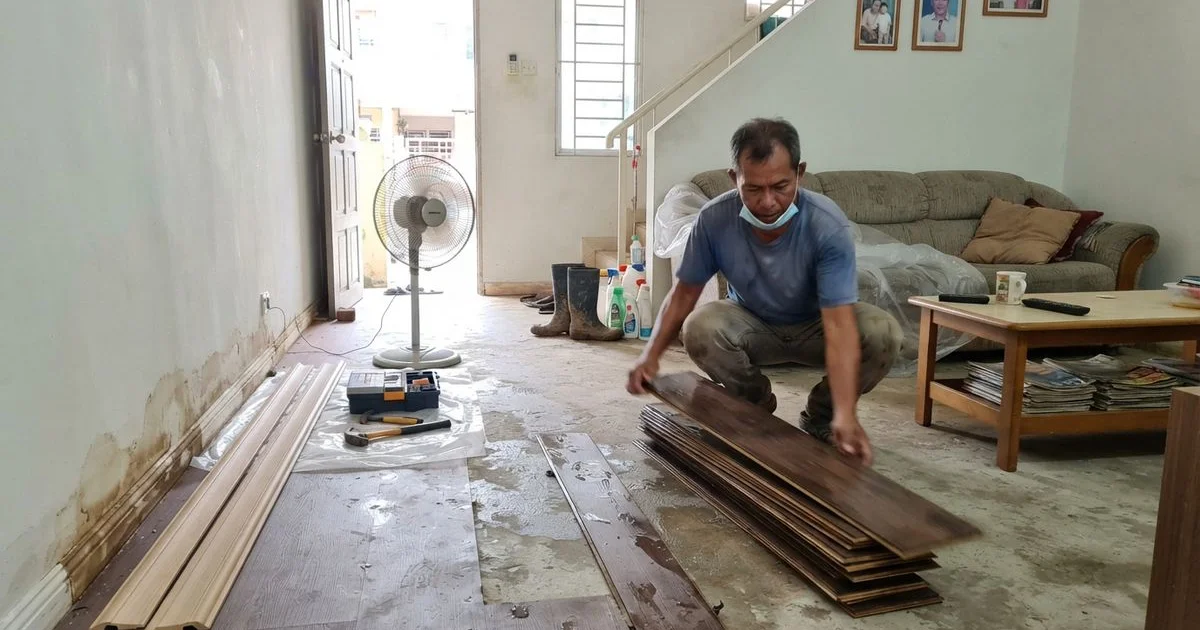
This is general information, not insurance, financial, or structural engineering advice. If your home has experienced flood damage, check your specific insurance policy and consult a qualified professional for a structural assessment where needed.
Flash flooding during monsoon season is a familiar reality for many parts of Klang Valley, and flooring is often one of the first things affected when water gets into a home. What happens in the days right after matters almost as much as the repair itself, since how quickly water is removed and the space dried out affects whether a floor can be saved or needs full replacement.
What to do in the first few days
Getting standing water out and starting to dry the space as soon as it’s safe to do so is the single most important step. Fans, dehumidifiers, and open windows and doors where possible all help speed up drying. Moving furniture and rugs off an affected floor immediately prevents trapped moisture underneath from making the damage worse.
Take photos of the damage before starting cleanup, both for insurance purposes and to have a record if you need a contractor’s assessment later.
Which materials tend to survive a flood
| Material | Flood resilience | Typical outcome after water exposure |
|---|---|---|
| Tile / marble | High | Often survives intact, may need regrouting |
| SPC / rigid-core vinyl | High | Water-resistant core, often salvageable |
| Basic vinyl | Moderate | Can survive if dried quickly, edges may lift |
| Laminate | Low | Core often swells, usually needs replacement |
| Solid timber | Low-moderate | Can sometimes be dried and refinished if caught early |
| Carpet | Low | Usually needs full replacement, mould risk if not dried fast |
If you’re rebuilding after flood damage and considering a material change, tile, marble, or SPC flooring generally hold up better against future events than laminate or carpet, worth weighing if flooding is a recurring risk for your area.
Why speed matters more than most people expect
Materials that absorb water, laminate cores, carpet padding, and to a lesser extent solid timber, start breaking down or growing mould within as little as one to two days in a warm, humid climate. Klang Valley’s heat and humidity accelerate this compared with a drier climate, which is part of why a fast response matters more here than it might elsewhere.
A floor that looks intact right after a flood can still develop hidden mould or delamination underneath over the following weeks if it wasn’t dried properly. This is a genuine health concern worth taking seriously, not just a cosmetic one.
Ground floor and basement considerations
Ground-floor units and basement or semi-basement car parks carry the highest flood risk, and that’s often where the flooring choice matters most. If your area has a history of flash flooding, it’s reasonable to plan a ground-floor renovation around materials that can handle occasional water exposure without full replacement, even if it costs a bit more upfront than the cheapest option.
For homes that flood repeatedly, some owners choose to raise electrical points and skirting details slightly, alongside the flooring change, so that a moderate water event affects less of the surrounding fittings. This is worth discussing with a contractor experienced in flood-prone properties rather than treating the flooring as a one-off, disconnected decision.
Preventing a repeat problem
If flooding keeps recurring in the same spot, it’s worth asking whether the flooring repair alone will solve the underlying issue, or whether drainage, sealing around doors, or a raised threshold might reduce how much water gets in next time. A flooring contractor can advise on materials, but a broader assessment of water entry points is sometimes the more useful conversation before spending on a repair that could flood again next season.
Getting an assessment before you commit to a repair
Before deciding whether to dry, repair, or fully replace flooring after a flood, get an assessment from someone experienced with water damage rather than assuming based on how the surface looks. Subfloor and underlayment condition often tell a different story than the visible flooring above it.
It’s also worth checking your home insurance policy for what’s covered before committing to a repair scope, since coverage and claim processes vary significantly between providers and policies.
Once the repair or replacement is done, it’s worth working through a broader flooring checklist for a new home or finished renovation before you consider the job fully finished.
Our scoring method explains how contractor listings on this directory are ranked, which can help you find someone experienced with flood-related flooring assessment and repair in the area.
FAQ
- How soon after a flood should flooring be assessed?
- As soon as it's safe to do so. Standing water and trapped moisture cause more damage the longer they sit, especially under timber, laminate, or carpet, so a prompt assessment helps limit how much needs to be replaced versus dried out and saved.
- Can flooded timber or laminate flooring be saved?
- Sometimes, if water exposure was brief and the material is dried out quickly and thoroughly. Laminate is generally less salvageable than solid timber once water has penetrated the core, since the material itself can swell and delaminate permanently.
- What flooring holds up best in a flood-prone area?
- Tile, marble, and SPC or rigid-core vinyl handle water exposure far better than laminate, carpet, or solid timber, since they don't absorb water the same way and are more likely to survive a flood event without needing full replacement.
- Does home insurance typically cover flood damage to flooring?
- Coverage varies by policy and provider, so check your specific policy or speak with your insurer directly rather than assuming. This is general information, not financial or insurance advice.