Carpet tiles for offices and commercial spaces in Klang Valley
By Adam · Updated 2026-06-26
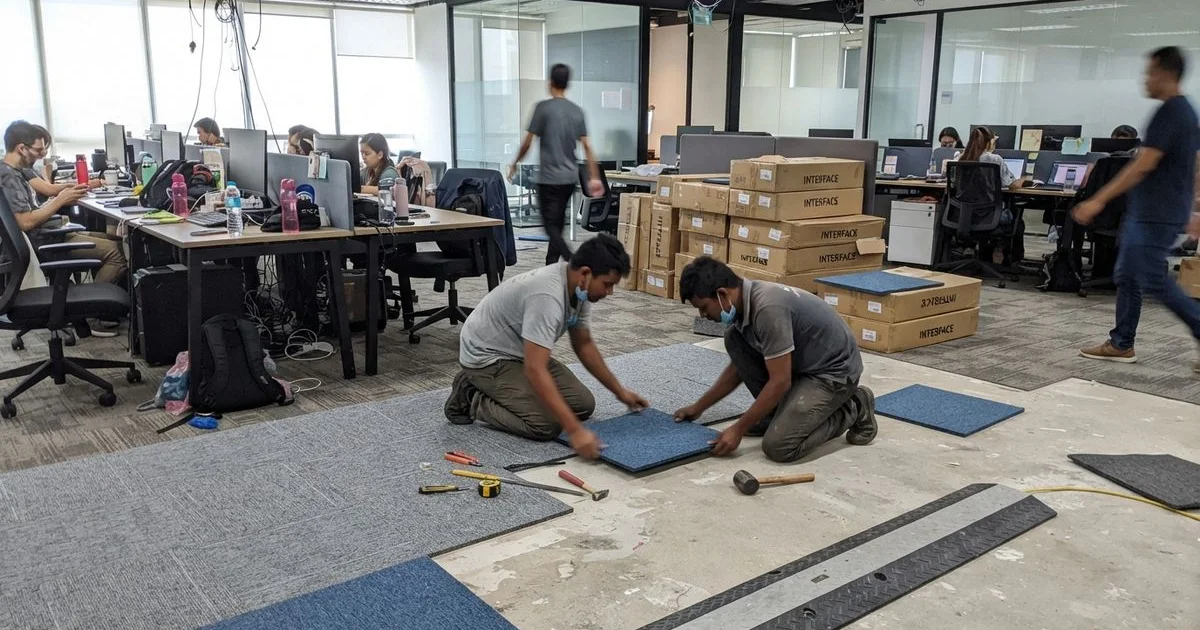
Carpet tiles are the default flooring choice for a lot of Klang Valley offices, and for good reason: they hold up to daily foot traffic, they’re easier to maintain section by section than broadloom carpet, and they come in enough patterns and colours to fit almost any office design. If you’re planning a fit-out or a flooring refresh, a few practical decisions upfront save headaches later.
Why carpet tiles work well for commercial spaces
Unlike a single sheet of broadloom carpet, carpet tiles are installed and replaced individually. If a section near a doorway or under a desk wears out or gets stained beyond cleaning, that section can be swapped without redoing the whole floor. This matters more than it sounds like it should, since high-traffic zones, entrances, corridors, near the pantry, wear noticeably faster than quieter areas like private offices.
Carpet tiles also install faster than broadloom, with less disruption to a working office, which matters if you’re doing a renovation around business hours rather than shutting the whole space down.
What to think about before you buy
| Consideration | Why it matters |
|---|---|
| Traffic level by zone | Entrances and corridors need a higher-durability grade than private offices |
| Backing type | Some backings handle moisture and rolling chair wheels better than others |
| Colour and pattern | Patterned or multi-tone tiles hide dirt and wear better than solid colours |
| Acoustic performance | Carpet reduces noise more than hard flooring, useful in open-plan offices |
| Maintenance plan | Regular vacuuming and spot cleaning extends tile life significantly |
If you’re comparing suppliers, browsing carpet and carpet tile contractors in the area is a reasonable starting point, since not every flooring contractor stocks a wide commercial-grade range.
Planning for replacement from day one
A smart move at installation is ordering a small surplus of the same tile batch and storing it, so future spot replacements match the existing floor’s colour and wear pattern. Carpet tile production runs vary slightly between batches, and a replacement tile bought years later from a different production run can stand out visually even if it’s technically the same product.
It’s also worth mapping out your highest-traffic zones before installation and considering a slightly higher-durability grade there, even if the rest of the office uses a standard grade. The cost difference is usually modest relative to how much longer the higher-traffic areas last.
Scheduling around a working office
Most commercial carpet tile installs happen in phases or after hours to avoid shutting the office down entirely, but that’s not automatic, it’s worth asking your contractor directly how they plan to sequence the work if the space needs to stay operational. A well-organised supplier will typically break a larger floor into zones and work through them in a way that keeps most of the office usable throughout.
Ask, too, about odour and off-gassing from adhesives if you’re using a glued-down system rather than tiles with a peel-and-stick or loose-lay backing. For an occupied office, a low-odour adhesive and good ventilation during installation make the transition back to normal work smoother, particularly if the install happens during business hours rather than overnight.
Keeping the maintenance simple
Regular vacuuming is the single biggest factor in how long carpet tiles look good, since grit ground into the pile is what causes most visible wear. Spot-cleaning stains quickly, rather than letting them set, also matters more than any special cleaning product. Many commercial carpet tile products are treated to resist staining, but that resistance works best when spills are addressed promptly rather than left overnight.
For rolling office chairs, a chair mat over high-use spots reduces the specific wear pattern that heavy chair traffic causes, extending the life of that section noticeably.
Budget-wise, it’s worth weighing tile grade against how long you expect to be in the space. A shorter lease term might not justify the highest-durability grade throughout, while a longer-term office fit-out generally gets more value from spending a bit more upfront on tiles rated for heavier traffic, since replacement further down the line costs more in both material and disruption than getting the grade right the first time.
For a residential budget angle, the guide on budget-friendly flooring options for renters covers lower-cost choices for tenants rather than commercial fit-outs.
Our scoring method explains how contractor listings on this directory are ranked, which is worth checking before choosing a supplier for a commercial fit-out.
FAQ
- Why do offices use carpet tiles instead of broadloom carpet or hard flooring?
- Carpet tiles are easier to replace individually when a section wears out or gets stained, which matters in high-traffic commercial spaces. They also tend to be quicker to install and less disruptive than a full broadloom carpet or a hard flooring tear-out.
- How long do commercial carpet tiles typically last?
- It depends heavily on traffic and tile grade, but commercial-grade carpet tiles in a moderate-traffic office generally last several years before wear becomes noticeable, longer in lower-traffic areas like private offices or meeting rooms.
- Can carpet tiles be installed over an existing hard floor?
- Often yes, provided the existing floor is clean, flat, and dry. A contractor should still check the surface condition before installing, since an uneven or damaged subfloor can cause tiles to shift or wear unevenly over time.
- Do carpet tiles help with office noise?
- Yes, carpet in general absorbs sound better than hard flooring, which can noticeably reduce footstep noise and general office ambient sound compared with tile, vinyl, or timber flooring in the same space.