Renovating flooring in a Klang Valley condo: permits and management approval
By Adam · Updated 2026-06-19
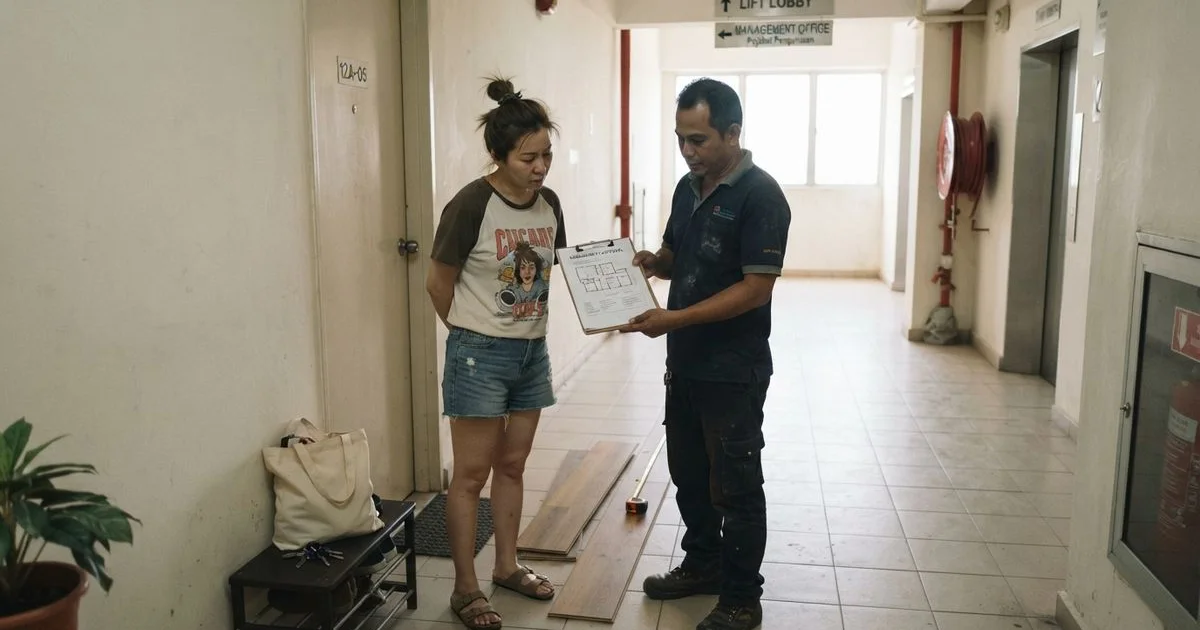
This is general information about a common process, not legal advice. Renovation rules vary by building and are set by each management corporation or joint management body, so always confirm the specific requirements for your property before starting work.
Flooring renovations in landed houses are usually straightforward from a permissions standpoint. Condos and apartments across Klang Valley are a different story: most buildings require some form of approval before work starts, and skipping that step is one of the more common ways a renovation timeline gets derailed.
Why condos have their own approval process
Shared buildings have shared risks. Water leaks from a flooring job in one unit can damage the unit below. Impact noise from hard flooring like tile or timber can travel between floors more than carpet or vinyl does. Contractors and material deliveries use shared lifts and loading areas that need scheduling so they don’t disrupt other residents. Management approval exists to manage these shared risks, not just as paperwork for its own sake.
Typical steps before work can start
| Step | What it usually involves |
|---|---|
| Check house rules | Review your building’s renovation guidelines, often available from management office or resident portal |
| Submit a renovation application | Scope of work, contractor details, and planned timeline |
| Pay a renovation deposit | Refundable deposit held against damage to common areas, common in many buildings |
| Confirm working hours | Most buildings restrict noisy work to specific hours and days |
| Arrange lift and access booking | Larger material deliveries often need a scheduled lift slot |
| Get sign-off before starting | Some buildings require a final go-ahead before the contractor begins |
What flooring changes typically need extra attention
Any change to a wet area’s flooring, bathrooms and kitchens, usually draws closer scrutiny, since waterproofing has to be maintained or redone properly to avoid leaks affecting the unit below. Switching to hard flooring like tile, marble, or timber in a unit that previously had carpet can also trigger acoustic requirements, since some buildings mandate an underlay or acoustic barrier specifically to limit noise transfer between floors.
If your renovation includes changing material type, not just refreshing the same material, budget extra time for approval, since these applications sometimes need a closer look from management or even the original building specifications.
Keeping neighbours on side
Flooring work is noisy work, especially sanding, tile cutting, or removing an old floor. Even with approved working hours, letting your immediate neighbours know when work will start, roughly how long it’ll run, and who to contact if something’s disruptive goes a long way toward avoiding complaints that could otherwise land back on your renovation approval. Some buildings ask for this as a formal step; even where they don’t, it’s a low-effort way to keep the process smooth.
Delivery logistics are worth planning too. Tile, marble, and timber flooring are heavy and bulky, and moving them through a shared lobby or lift takes coordination, especially in buildings with a single service lift shared by multiple units under renovation at once. Confirming a delivery window with both your contractor and building management avoids materials sitting in a lobby or being delayed at the loading dock.
Working with your contractor on this
A flooring contractor experienced with condo work in the area will usually know the general shape of this process, even if the specifics differ building to building. Ask upfront whether they’ve worked in strata properties before and how they typically handle the approval paperwork and scheduling around it. A contractor who treats this as a routine part of the job, rather than a surprise, tends to keep the timeline more predictable.
Before you pay anything, check the paperwork on the contractor side too. The guide on flooring contractor deposits and contracts covers the red flags worth watching for before you sign.
It’s worth starting the approval process as early as possible, ideally before finalising a start date with your contractor, since waiting on management sign-off is one of the most common causes of a renovation start date slipping.
Our scoring method explains how contractor listings on this directory are assessed, which is a reasonable starting point when you’re choosing who to work with on a condo renovation.
FAQ
- Do I need approval to change my flooring in a condo?
- Most condos and apartments in Klang Valley require some form of notice or approval from the management corporation or JMB before renovation work begins, even for something like a flooring change. Rules vary by building, so check your house rules or ask management directly before booking a contractor.
- Why do some buildings restrict hard flooring like tile or timber on upper floors?
- Hard flooring can transmit more impact noise to the unit below than carpet or vinyl. Some buildings require an acoustic underlay under hard flooring specifically to reduce noise complaints from neighbours.
- How long does renovation approval usually take?
- It varies by building, from a same-week turnaround to a few weeks if the management committee only meets periodically. Submitting your renovation request as early as possible avoids it becoming the bottleneck on your project timeline.
- What happens if I renovate without approval?
- Consequences vary by building's house rules, and can include fines, a hold on lift or common area access for contractors, or a requirement to redo non-compliant work. It's a general information point, not a substitute for reading your specific building's rules.